
How Long Do Lip Fillers Last? (Brand-by-Brand Longevity Guide)
May 11, 2026
Masseter Botox for Jawline Slimming in Miami: Cost, Units & What to Expect
May 13, 2026One of the most anxiety-inducing parts of getting lip fillers — especially for first-time patients — is not the treatment itself, but the days immediately after. Swelling, asymmetry, and a result that looks nothing like what you hoped for in the first 48 hours can send even the most prepared patient into a spiral of doubt. The reassuring truth is that understanding the lip filler swelling stages day by day transforms that anxiety into patience — because when you know exactly what’s happening to your lips and when, you can trust the process rather than panic through it.
At Pōk Aesthetic Bar in Coral Gables, FL, patient education around recovery is taken as seriously as the treatment itself. This complete guide walks through every stage of lip filler healing day by day — what your lips will look and feel like, what’s completely normal, what warrants a call to your provider, and exactly when you’ll see your true final result.
Why Lip Filler Causes Swelling: The Clinical Reason 🔬
Swelling after lip filler is not a sign that something went wrong — it is an expected, physiological response to the injection process. Understanding why it happens removes a significant amount of the post-treatment anxiety patients experience.
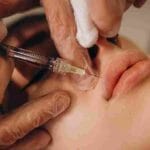
When a needle introduces any substance into tissue — including a biocompatible hyaluronic acid filler — the body initiates a localized inflammatory response. Blood flow increases to the area, fluid moves into the surrounding tissue, and the small trauma of the needle track produces temporary inflammation. In the lips specifically, this response is amplified by two additional factors:
The lips are highly vascular. The extensive blood supply to the perioral region means the inflammatory response is faster and more pronounced than in less vascular zones like the cheeks. More blood flow equals more fluid — and more visible initial swelling.
Hyaluronic acid is hydrophilic. HA naturally attracts and binds water. In the first 24–72 hours after injection, the freshly placed hyaluronic acid filler absorbs moisture from surrounding tissue — contributing to the exaggerated swelling that makes day-one results look so different from the final outcome.
Lip Filler Swelling Stages Day by Day: The Complete Timeline 📅
This is the section patients search for most urgently — and the most important one to bookmark. Here is exactly what to expect at each stage of the lip filler swelling timeline:
Day of Treatment (Day 0) Your lips will begin swelling within 1–2 hours of treatment. By the end of the day, you’ll notice significant puffiness — often much more than you expected. The lips will feel tender and slightly firm. Any bruising that occurs will begin to appear as subtle discoloration. The result at this stage looks nothing like your final outcome — and that is entirely normal. Do not assess your results today.
Day 1 — Peak Initial Swelling Day one is typically when swelling is at or approaching its peak. Lips may look dramatically fuller than intended, and any asymmetry between the upper and lower lip is likely exaggerated by uneven fluid distribution. Bruising, if present, is most visible now. The lips may feel tight, warm, and sensitive to touch. This is the stage that generates the most alarm — and the most important day to remember: this is not your final result.
Day 2 — Still Significant, Beginning to Settle Swelling remains pronounced on day two but may begin to show very early signs of reduction — particularly in the morning before activity increases circulation. Bruising may look darker before it begins to fade. The lips still look considerably fuller than the intended final result. Continue all aftercare instructions and avoid any heat exposure, which amplifies swelling during this stage.
Days 3–4 — Noticeable Reduction Begins By days three and four, most patients see a meaningful reduction in overall lip size. The dramatic puffiness of days one and two begins to resolve, and the lips start looking more recognizably like a lip filler result rather than a swelling event. Asymmetry typically begins to even out. Bruising transitions from deep purple-red to yellow-green as it resolves. Tenderness is noticeably reduced.
Days 5–7 — Settling Into Shape The midpoint of healing. By the end of the first week, most of the acute post-treatment swelling has resolved. Your lips are beginning to reflect something much closer to your actual result — though some residual swelling and mild firmness remain. Most patients feel comfortable in social settings by day 5–7. Bruising is largely resolved or reduced to minor yellowish toning.
Days 7–10 — Filler Integration The hyaluronic acid filler is integrating with surrounding tissue during this stage. The lips soften noticeably as the product settles into its natural position. Any remaining asymmetry or uneven texture from the injection process continues to smooth out. This is the stage where patients often breathe their first sigh of relief — the result is coming into focus.
Days 10–14 — Final Result Emerging By the end of the second week, swelling is fully resolved for the vast majority of patients. The filler has integrated completely, the lips feel soft and natural, and the result you’ll maintain for the next 6–12 months is now visible. This is the appropriate time to assess whether you’re happy with the outcome and to book a follow-up if any minor refinement is desired. Browse the Pōk Aesthetic Bar results gallery to see what final lip filler outcomes look like on real patients.
Lip Filler Swelling Timeline at a Glance
| Day | Swelling Level | Bruising | How Lips Feel |
| Day 0 | Moderate–High | Begins appearing | Tender, firm |
| Day 1 | Peak | Most visible | Tight, warm, sensitive |
| Day 2 | Still high | Darkening | Uncomfortable but improving |
| Days 3–4 | Noticeably reducing | Fading (yellow-green) | Less tender |
| Days 5–7 | Mild residual | Nearly resolved | Softening |
| Days 7–10 | Minimal | Resolved | Natural-feeling |
| Days 10–14 | Fully resolved | Fully resolved | Final result visible |
Normal Swelling vs. Warning Signs: When to Call Your Provider ⚠️
Not all post-treatment symptoms are part of the expected lip filler swelling stages. Knowing the difference between normal healing and a complication requiring attention is essential.
Normal and expected:
- Puffiness and fullness that peaks at day 1–2 and steadily resolves
- Mild to moderate bruising that progresses from red-purple to yellow-green over 7–10 days
- Tenderness and sensitivity to touch for 3–5 days
- Asymmetry that gradually evens out over the first 2 weeks
- Small, firm bumps at injection sites that soften over days 3–7
Symptoms that warrant contacting your provider:
- ❌ Increasing pain after day 2 rather than improving
- ❌ Hard, blanching white areas on or around the lips — can indicate vascular compromise and requires immediate attention
- ❌ Spreading redness or warmth beyond the treatment area, particularly with fever — may indicate infection
- ❌ Extreme asymmetry that is not improving after day 7
- ❌ Itching, hives, or systemic reaction — rare but possible allergic response
When in doubt, contact your provider. At Pōk Aesthetic Bar, the team is available to assess any post-treatment concerns — reach out via the contact page or call directly.
Factors That Affect How Much You Swell
The lip filler swelling stages day by day don’t look identical for every patient. Several individual factors influence both the severity and duration of post-treatment swelling:
- Treatment volume: More filler means more tissue disruption and typically more swelling — one of many reasons conservative dosing is recommended, especially for first-timers
- Injection technique: Fine-needle micro-deposit technique produces less tissue trauma and typically less swelling than bolus injection methods
- Individual vascular response: Some patients have a stronger inflammatory response than others — this is largely genetic and not predictable in advance
- Medications and supplements: Blood thinners, NSAIDs (aspirin, ibuprofen), fish oil, and vitamin E all increase bruising and can amplify swelling — ideally avoided in the 5–7 days before treatment
- Hydration level at time of treatment: Well-hydrated patients typically experience less pronounced HA-driven fluid attraction post-injection
- Time of day the treatment was performed: Swelling often appears more pronounced in the morning due to natural fluid accumulation during sleep
How to Reduce Lip Filler Swelling Faster ✅
While the lip filler swelling stages day by day follow a largely predetermined biological timeline, several practical steps can meaningfully reduce severity and duration:
- Apply a cold compress (never direct ice) wrapped in a cloth to the lips in 10-minute intervals in the first 24–48 hours — this constricts blood vessels and reduces fluid accumulation
- Sleep elevated on the first night — elevating the head reduces fluid pooling in facial tissue overnight
- Avoid heat for at least 48 hours: hot showers, saunas, steam rooms, and Miami’s direct sun all vasodilate and worsen swelling
- Skip intense exercise for 24–48 hours — cardiovascular activity increases circulation and amplifies the inflammatory response
- Stay well hydrated — adequate water intake supports healthy fluid regulation and tissue healing
- Avoid salty foods in the first 48 hours — sodium promotes water retention and can exaggerate swelling
- Do not touch, press, or massage the lips — manipulation before filler has integrated can cause displacement and worsen swelling
For the complete post-treatment protocol, the lip filler recovery and aftercare guide and the what not to do after lip fillers guide from Pōk Aesthetic Bar cover every step in detail.
Common Concerns During the Swelling Stages (And What They Mean)
“My lips look way too big — did I get too much?” Almost certainly not. The dramatic fullness in days 1–2 is driven by swelling and HA water attraction — not by the actual volume of filler placed. Reserve all judgment until the 2-week mark.
“My Cupid’s bow has disappeared / my lips look uneven.” Swelling distributes unevenly — it frequently settles in one area more than another, temporarily distorting lip shape. This almost always resolves naturally as swelling subsides through days 5–10.
“There are lumps under my lip.” Small, palpable firmness at injection sites is normal in the first 3–5 days. The filler is integrating with tissue and will soften. Persistent lumps beyond 2 weeks warrant a conversation with your provider.
“My lips feel very tight.” Tightness is a direct result of the inflammatory fluid in the tissue. It resolves as swelling reduces — typically significantly improved by days 4–5.
Heal Beautifully at Pōk Aesthetic Bar in Coral Gables 🌸
Understanding the lip filler swelling stages day by day is what separates patients who trust their results from those who panic through the process. At Pōk Aesthetic Bar in Coral Gables, FL, every lip filler patient receives thorough pre- and post-treatment guidance so that every stage of healing feels expected and manageable — never alarming.
Our board-certified team is available to answer any questions that arise during recovery, and our treatment approach — conservative dosing, precise micro-deposit technique, and carefully selected soft HA fillers — minimizes swelling at every stage. Visit us at 4649 Ponce de Leon #406, Coral Gables, FL 33146.
Book Your Lip Filler Appointment at Pōk Aesthetic Bar →
Frequently Asked Questions (FAQs)
When does lip filler swelling peak? Lip filler swelling typically peaks on Day 1 — the day after treatment — and begins to reduce noticeably from Day 3 onward. By the end of the first week, the majority of swelling has resolved for most patients. Full resolution and final results are visible at the 2-week mark.
Is it normal for lips to look uneven after lip filler? Yes, completely. Asymmetry during the lip filler swelling stages is almost always caused by uneven fluid distribution — not uneven filler placement. As swelling resolves through days 5–10, the balance between the two sides naturally evens out. Persistent asymmetry at the 2-week mark is the appropriate time to discuss refinement with your provider.
How long does lip filler swelling last? Acute swelling from lip filler typically lasts 3–5 days, with mild residual puffiness resolving by days 7–10. Full resolution of all swelling and final result visibility occurs at approximately 14 days post-treatment for most patients. The complete recovery timeline from Pōk Aesthetic Bar covers every healing milestone in detail.
Should I be worried if my lips are still swollen on Day 5? Mild residual swelling on Day 5 is entirely normal — it’s part of the expected lip filler swelling stages. Swelling doesn’t follow a perfectly uniform timeline, and some patients experience slightly longer resolution than others. What warrants attention is swelling that is increasing after Day 2, accompanied by worsening pain, blanching, or spreading redness — which should be reported to your provider promptly.
Can I reduce lip filler swelling with ice? Yes — but correctly. Use a cold compress wrapped in a clean cloth rather than direct ice, which can damage delicate lip skin. Apply in 10-minute intervals in the first 24–48 hours only. Beyond 48 hours, cold compresses have minimal benefit on post-filler swelling. Never massage or press on the lips while applying cold — the focus is gentle surface cooling, not manipulation of the tissue.
People Also Ask
What do lips look like on day 3 after filler? On Day 3 of the lip filler swelling stages, patients typically see the beginning of meaningful reduction from peak swelling. The dramatic puffiness of days 1–2 starts to resolve, bruising transitions from red-purple to yellow-green, and the lips begin to look more like a lip filler result. Asymmetry may still be present but is usually beginning to even out.
How long until lip filler looks normal? Most patients feel their lip filler looks genuinely normal — natural, soft, and proportionate — by Days 7–10 as swelling fully resolves. The absolute final result, with complete filler integration and zero residual inflammation, is visible at Day 14. Any assessment or comparison to desired results before this point is premature.
Does drinking water help with lip filler swelling? Yes. Staying well hydrated supports healthy fluid regulation and tissue healing during the lip filler swelling stages. It also helps counterbalance sodium-driven water retention if dietary salt is high post-treatment. Aim for consistent, adequate hydration in the week following treatment.
Can you speed up how fast lip filler swelling goes down? You can meaningfully reduce severity and duration with cold compresses in the first 48 hours, sleeping elevated the first night, avoiding heat and exercise for 48 hours, avoiding salty foods, and staying well hydrated. These steps don’t override biology entirely — but they can reduce peak swelling and shorten the duration of each day-by-day stage noticeably.
Why do lips swell more on one side after filler? Uneven swelling is extremely common during lip filler healing and almost never indicates a problem. Different areas of the lip have slightly different vascular density and tissue thickness — meaning inflammatory fluid accumulates unevenly. In most cases, apparent asymmetry from one-sided swelling resolves naturally by Days 7–10 as the fluid redistributes and absorbs.