
How Much Lip Filler Do You Actually Need? An Honest Guide
May 21, 2026
What Is a Medical Spa? Everything You Need to Know
May 25, 2026The lip flip is one of the most elegant and underestimated treatments in aesthetic medicine — a small amount of neurotoxin, placed precisely above the upper lip, that gently rolls the lip outward for a more visible, defined pout without adding a single drop of volume. But one of the most common questions patients ask before booking is also one of the most specific: how many Botox units do you actually need for a lip flip?
The answer matters more than most patients realize — because the lip flip is one of the few injectable treatments where dosing precision is absolutely critical. Too few units and the result is barely visible. Too many and you risk temporarily affecting the muscle function needed for speaking, sipping, or playing an instrument. Getting the dose exactly right is what makes the difference between a beautiful subtle result and a functional inconvenience.
At Pōk Aesthetic Bar in Coral Gables, FL, the lip flip is one of the most frequently performed injectable treatments — and the team’s anatomy-first approach to dosing is what makes outcomes consistently natural and functional. This complete 2026 guide covers everything you need to know about how many Botox units for a lip flip, how dosing varies by product, and what to expect at every stage of your result.
What Is a Lip Flip and How Does It Work? 💉
Before diving into units, a quick explanation of the mechanism — because understanding how the lip flip works is what makes the dosing rationale make sense.
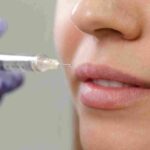
A lip flip involves injecting a small amount of neurotoxin — Botox, Dysport, or Daxxify — into the orbicularis oris muscle just above the upper lip’s vermillion border. The orbicularis oris is a circular muscle that surrounds the mouth and controls lip movement. In its natural resting state, this muscle holds the upper lip in a position that partially curls it inward — meaning a portion of the upper lip is hidden rather than visible.
When a small amount of neurotoxin relaxes the orbicularis oris along the upper border, the muscle’s inward pull is reduced. The upper lip gently rolls outward and upward — revealing more of the lip’s surface and creating the appearance of a fuller, more defined pout. No volume is added. No structural change occurs. It is purely a positional effect achieved through targeted muscle relaxation.
This mechanism is also why dosing is so precise — the orbicularis oris serves important functional roles in speech, drinking, and expression. Relaxing it too aggressively can temporarily impair these functions. Relaxing it too little produces no visible result. The therapeutic window is narrow, and hitting it consistently requires genuine expertise.
How Many Botox Units for a Lip Flip? The Standard Dosing Range
For a standard Botox lip flip, the widely accepted dosing range in 2026 is 4 to 6 units total — placed in a series of small injection points along the upper border of the orbicularis oris, typically distributed across the midline and lateral zones of the upper lip.
Breaking down the standard dose:
- 4 units (conservative): Appropriate for first-time lip flip patients, patients with thinner or more responsive orbicularis oris muscles, or those who want the most subtle, natural result. May produce a gentler roll with full preservation of all oral function.
- 5 units (standard): The most common starting dose for most patients. Delivers a clearly visible lip flip result with a well-balanced relaxation of the target muscle zone. Minimal functional impact in most patients.
- 6 units (moderate): Appropriate for patients with a stronger or more dominant orbicularis oris who need slightly more blockade to achieve the desired positioning effect. Produces a more pronounced lip flip result.
What these units look like in practice: 4–6 units of Botox represents one of the smallest injectable doses in all of aesthetic medicine. For context, a standard forehead treatment uses 10–20 units and a frown line treatment uses 15–25 units. The lip flip’s minimal dose is part of what makes it one of the most accessible entry points into injectable treatments — both in cost and in commitment.
Units by Neurotoxin: Botox vs Dysport vs Daxxify for the Lip Flip
The number of units needed for a lip flip varies depending on which neurotoxin product is used — because Botox, Dysport, and Daxxify are not dosed equivalently. This is one of the most important distinctions for patients comparing quotes between providers.
| Neurotoxin | Units for Lip Flip | Dosing Ratio vs Botox | Duration | Available at Pōk |
| Botox | 4–6 units | 1:1 baseline | 2–4 months | ✅ Yes |
| Dysport | 10–18 units | ~2.5:1 ratio | 2–4 months | ✅ Yes |
| Daxxify | 2–4 units | ~0.6:1 ratio | 3–5 months | ✅ Yes |
Why the unit counts differ so dramatically:
- Dysport has a smaller molecular weight than Botox and is formulated at a different concentration — meaning it takes more Dysport units to achieve the equivalent effect of a given number of Botox units. The standard conversion ratio is approximately 2.5:1 (Dysport to Botox). When comparing quotes, a provider offering “4 units Botox” and another offering “12 units Dysport” for a lip flip may be quoting comparable clinical doses — the unit number alone doesn’t tell the full story.
- Daxxify is a newer peptide-enhanced neurotoxin that some providers find delivers equivalent effect at slightly lower unit counts than Botox, combined with its extended 6–9 month duration advantage. For patients who want fewer total treatments per year, Daxxify represents an interesting option for lip flip maintenance. Explore the full Daxxify vs Botox comparison before deciding which product is right for you.
At Pōk Aesthetic Bar, the team offers all three neurotoxins for lip flip treatments and selects the most appropriate product based on each patient’s goals, anatomy, and preferences. The full wrinkle relaxer menu covers every available option.
Factors That Affect How Many Units You’ll Need ⚙️
The 4–6 unit standard range for Botox lip flip is a useful starting point — but individual factors can shift the appropriate dose meaningfully in either direction.
Orbicularis oris muscle strength: Patients with a naturally strong or hypertrophied orbicularis oris — common in those who play wind instruments, singers, or habitual straw users — may need the upper end of the range (5–6 units) to achieve a visible positional change. Patients with a thinner, more responsive muscle may see excellent results at 4 units.
Upper lip visibility during smiling: The primary indication for a lip flip is an upper lip that disappears or significantly reduces in visibility during smiling — caused by a strong muscular inward pull. The more dramatically the lip disappears, the more blockade is typically needed to counteract it. An experienced provider will have you smile and relax your expression during the assessment to calibrate the appropriate dose.
Lip anatomy and existing lip volume: Patients with very thin upper lips sometimes benefit from a slightly more conservative dose — a full 6-unit relaxation in a very thin lip can occasionally produce a slight functional impact that wouldn’t occur in a lip with more baseline tissue mass.
Treatment history: Patients who have received lip flips consistently over multiple sessions may develop some degree of orbicularis atrophy — meaning the muscle has weakened from repeated neurotoxin treatment and responds well at the lower end of the dosing range. First-time patients typically require the full standard dose.
Concurrent lip filler: When a lip flip is combined with lip filler in the same appointment — a popular combination at Pōk Aesthetic Bar — the provider may slightly adjust the flip dose to account for the added volume and structural support from the filler. The two treatments are fully compatible and complement each other well.
How Many Injection Points for a Lip Flip?
The standard lip flip treatment involves 4 to 6 injection points distributed along the upper vermillion border — not a single injection. Understanding this is important for patients who imagine the lip flip as one quick jab.
The typical injection pattern for a Botox lip flip distributes product across:
- 2 paramedian points (just beside the midline of the upper lip)
- 2 lateral points (near the corners of the Cupid’s bow or slightly lateral)
- Sometimes 1 midline point for patients needing stronger central lifting
This distributed placement ensures the neurotoxin relaxes the orbicularis oris evenly across the full width of the upper lip — producing a smooth, symmetrical roll rather than a localized or uneven result. Concentrating the entire dose at a single point is an injection technique error that produces asymmetric, unnatural outcomes.
How to Know If You Got the Right Dose ✅
How many Botox units for a lip flip is only half the question — the other half is knowing whether the dose you received was actually right for your anatomy. Here’s what a correctly dosed lip flip looks like at full onset:
Signs of optimal lip flip dosing:
- The upper lip rolls gently outward and upward at rest — more of the lip surface is visible without being pushed forward artificially
- The result looks natural in photos and in conversation — friends notice you look great, not that anything was done
- You can speak, drink, whistle, and use a straw with only minimal, temporary adaptation
- The Cupid’s bow is more defined and the lip border appears crisper
- At maximum onset (Day 10–14), movement in the upper lip area is reduced but not absent
Signs the dose may be slightly too high:
- Difficulty forming certain consonants (P, B, M, F) in the first 1–2 weeks — a temporary functional side effect that resolves as the dose adjusts
- A slight dropping or heaviness of the upper lip that looks unnatural at rest
- Difficulty sipping from a straw or controlling saliva at the lip border
- Asymmetry in lip movement during speech
Signs the dose may be too low:
- No visible positional change in the upper lip at Day 10–14
- Lip still disappears or significantly reduces during smiling
- No difference in how much upper lip tooth show is visible at rest
Most dosing adjustments — in either direction — can be addressed at a 2-week follow-up appointment with the treating provider. At Pōk Aesthetic Bar, every lip flip patient is invited to a follow-up assessment once full onset has occurred.
Lip Flip vs Lip Filler: Does the Right Dose Change the Equation?
For patients deciding between a lip flip and lip filler — or considering combining them — understanding that the lip flip’s mechanism is entirely about positioning rather than volume helps clarify when dosing matters most.
At low, conservative doses, the lip flip produces a subtle, barely-there result — ideal for first-timers or patients who want the most natural possible enhancement. At the upper end of the dosing range, the result becomes more pronounced but carries slightly higher functional consideration. There is no dose at which a lip flip adds volume — that goal requires hyaluronic acid filler.
For patients weighing both options or wondering which is better for their goals, the full Botox lip flip vs lip filler comparison covers the complete decision framework. And for patients curious about natural lip enhancement without filler, the lip flip is featured as one of the strongest non-filler options available.
Book Your Lip Flip at Pōk Aesthetic Bar in Coral Gables 🌸
Getting the Botox unit count exactly right for a lip flip is the difference between a result you love and one you barely notice — or one that temporarily affects your daily comfort. At Pōk Aesthetic Bar in Coral Gables, FL, every lip flip is performed by a board-certified medical professional who assesses your orbicularis oris anatomy, discusses your goals, and calibrates the dose precisely to your individual needs.
Whether this is your first lip flip or a follow-up from a previous treatment, you’ll leave with a result that’s natural, functional, and genuinely worth having. Visit us at 4649 Ponce de Leon #406, Coral Gables, FL 33146, review our results gallery and FAQ before booking.
Book Your Lip Flip at Pōk Aesthetic Bar →
Frequently Asked Questions (FAQs)
How many Botox units do you need for a lip flip? The standard Botox lip flip dosing range is 4 to 6 units total — placed in 4 to 6 injection points distributed along the upper orbicularis oris. Four units is appropriate for first-time or more conservative patients; 5–6 units suits patients with stronger muscle tone or a more visible upper lip disappearance during smiling. This is one of the smallest neurotoxin doses in aesthetic medicine, making the lip flip one of the most accessible injectable treatments available.
How many Dysport units for a lip flip? Dysport requires approximately 10 to 18 units for a lip flip — significantly more than Botox due to its lower concentration per unit. The typical conversion ratio is approximately 2.5:1 (Dysport to Botox), meaning 4–6 units of Botox is clinically equivalent to approximately 10–15 units of Dysport. Both products are available for lip flip treatments at Pōk Aesthetic Bar.
How long does a lip flip last with 4–6 units of Botox? A lip flip performed with 4–6 units of Botox typically lasts 2 to 4 months — the shorter end of the neurotoxin duration range, because the orbicularis oris is a highly active muscle that metabolizes product faster than less-used areas. Dysport lasts a comparable duration. Daxxify may extend the lip flip result to 3 to 5 months for some patients. Consistent maintenance keeps the result continuous and may gradually extend longevity as the muscle undergoes mild atrophy.
Can too many Botox units for a lip flip cause problems? Yes. Excessive dosing for a lip flip — typically more than 8–10 Botox units — can over-relax the orbicularis oris and produce temporary functional issues: difficulty forming certain consonants, trouble sipping from a straw, or an unnatural heaviness to the upper lip. These effects are temporary and resolve as the neurotoxin metabolizes, but they are uncomfortable and avoidable with correct dosing by an experienced provider.
Is 4 units of Botox enough for a lip flip? For many patients — particularly first-timers, those with thinner or more responsive upper lip muscles, or those seeking the most subtle result — 4 units of Botox is entirely sufficient for a visible lip flip. The result will be more conservative than a 6-unit treatment but completely natural-looking and functional. If the result is too subtle at the 2-week assessment, additional units can be added at a follow-up.
People Also Ask
How much does a Botox lip flip cost in 2026? A Botox lip flip typically costs $75 to $150 at reputable med spas in Miami in 2026 — reflecting the small number of units (4–6) involved and the relatively brief treatment time. Because the lip flip lasts only 2–4 months, patients often book 3–4 times per year for continuous results, with an annual investment of approximately $225–$600. This makes it one of the most affordable entry points into injectable lip enhancement.
Where exactly is Botox injected for a lip flip? Botox for a lip flip is injected along the upper vermillion border — the area just above the upper lip where the orbicularis oris muscle sits closest to the surface. The standard injection pattern uses 4–6 points distributed across the paramedian and lateral zones of the upper lip border, ensuring even relaxation of the muscle across the full width of the lip for a symmetrical roll.
Can I combine a lip flip with lip filler in the same appointment? Yes — and it’s a popular combination at Pōk Aesthetic Bar. The lip flip adds upper lip definition and prevents the lip from rolling inward during smiling, while filler adds volume and shape. The two treatments are fully compatible and are routinely performed together. The provider may slightly adjust the flip dose when combining with filler to account for the added structural support.
How do I know if I need a lip flip or lip filler? A lip flip is the better choice when your goal is making an upper lip that disappears during smiling more visible — without adding volume. Lip filler is the better choice when you want genuine volume, shape correction, or asymmetry improvement. Many patients benefit from both. The Botox lip flip vs lip filler guide covers the full decision framework in detail.
Does a lip flip affect your smile? A correctly dosed lip flip — 4–6 units of Botox placed precisely in the orbicularis oris — does not meaningfully affect the smile muscles. The zygomaticus major and minor, which produce the smile, are not targeted by lip flip injections. However, overly aggressive dosing (beyond the standard therapeutic range) or imprecise placement can occasionally produce a temporary subtle effect on upper lip movement during smiling. This is why choosing a board-certified, experienced injector is critical for lip flip treatments.