

Botox for Excessive Sweating (Hyperhidrosis) in Miami: Does It Work?
May 14, 2026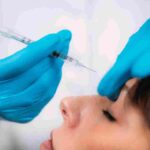
How Long Botox Takes to Work: What to Expect in 2026
May 18, 2026It’s one of the most common questions a med spa receives from younger patients: at what age should you start Botox for preventative purposes? A decade ago, the idea of someone in their mid-twenties considering neurotoxin treatment would have raised eyebrows. Today, preventative Botox in the 20s and 30s is not only mainstream — it is increasingly supported by dermatological science as one of the most effective long-term investments in skin health a young person can make.
At Pōk Aesthetic Bar in Coral Gables, FL, the preventative Botox conversation is one the team has regularly with patients of all ages — and the answer is always nuanced, individualized, and rooted in anatomy rather than a blanket age rule. This guide covers the science of preventative Botox, the right age to consider starting, what the treatment actually involves at this stage, and how to know whether it’s genuinely the right time for you.
What Is Preventative Botox? 💡
Preventative Botox — sometimes called “baby Botox” or proactive neurotoxin treatment — refers to the use of small amounts of Botox, Dysport, or Daxxify in younger patients before significant wrinkles have formed, with the explicit goal of slowing their development rather than correcting existing lines.
Traditional Botox targets dynamic wrinkles — creases formed by repeated muscle movement that have become etched into the skin over years of use. Preventative Botox intervenes earlier in that process, relaxing the repetitive muscle contractions before they have the chance to create permanent skin damage. It is proactive rather than reactive — the aesthetic equivalent of wearing sunscreen before a sunburn rather than treating one after the fact.
At lower doses than corrective treatment, preventative Botox still delivers the same mechanism of action — temporarily inhibiting muscle contraction — but focuses on a narrower set of zones where dynamic lines are beginning to emerge rather than where they have already established themselves.
The Science Behind Preventative Botox
Understanding why preventative Botox works requires a brief look at how dynamic wrinkles form in the first place. Every time you squint, raise your eyebrows, frown, or smile, the underlying facial muscle contracts and the overlying skin folds. In youth, the skin springs back immediately — collagen and elastin are abundant, and recovery is instantaneous.
As the skin ages — accelerated by UV exposure (significant in Miami’s climate), repeated movement, and collagen depletion — those recovery springs gradually weaken. The folds stop bouncing back fully after each contraction. Over thousands of repetitions across years, they become etched into the dermis as permanent lines — the forehead creases, frown lines, and crow’s feet that define visible facial aging.
Preventative Botox interrupts this cycle early. By reducing muscle contraction frequency and force before the skin’s recovery capacity has significantly declined, it preserves the skin’s structural integrity at the dermal level — essentially reducing the cumulative mechanical stress that creates permanent wrinkles. The American Academy of Dermatology recognizes preventative neurotoxin use as a valid approach for appropriate younger candidates.
At What Age Should You Start Botox? A Decade-by-Decade Guide 📅
There is no single universally correct answer to at what age you should start preventative Botox — but there are decade-specific frameworks that reflect how skin aging progresses and where preventative treatment delivers the most clinical value.
In Your Early-to-Mid 20s (Ages 21–25)
Starting Botox at this stage is rarely clinically necessary — and most board-certified providers, including the team at Pōk Aesthetic Bar, would advise against routine preventative Botox in the early 20s unless there is a specific, visible concern. The collagen and elastin reserves of the early-to-mid 20s skin mean recovery from repeated expression is still strong, and the risk of beginning neurotoxin dependence without clinical indication outweighs the benefit for most patients.
The exception: Patients in their early 20s with very strong, deeply habitual expressions — intense squinters, heavy forehead movers — who already show early dynamic line etching may have a legitimate preventative case. This must be assessed in person, never assumed based on age alone.
In Your Late 20s (Ages 25–29)
This is where at what age should you start preventative Botox becomes genuinely relevant for many patients. The late 20s are typically when the first faint dynamic lines begin appearing at rest — not just during movement — in commonly expressive zones: the horizontal forehead, the glabellar area (the 11s between the brows), and the outer corners of the eyes (early crow’s feet).
At this stage, preventative Botox at conservative doses (often 30–40% lower than corrective dosing) can meaningfully slow the progression of these early lines before they become etched — with very low treatment commitment and completely natural-looking results.
In Your 30s (Ages 30–39)
The 30s are widely considered the prime window for starting preventative Botox — and the most impactful decade for establishing a long-term neurotoxin routine. Collagen production begins a measurable decline around age 30, UV damage accumulates, and dynamic lines in expression zones start transitioning from movement-only to resting lines.
Starting Botox in the early-to-mid 30s captures the transition point at which preventative and corrective treatment overlap — reducing the depth of lines that have begun to form while simultaneously preventing new ones from developing. The compounding atrophy benefit, where muscles gradually weaken from repeated neurotoxin treatment and require lower doses over time, also begins building most meaningfully in this decade.
In Your 40s and Beyond
By the 40s, most patients have moved beyond purely preventative treatment into a combination of prevention and correction. Preventative Botox is still valuable at this stage — new line formation can always be slowed — but the primary goal shifts to managing existing lines while maintaining the best possible skin quality going forward.
Signs You’re Ready for Preventative Botox — Regardless of Age ✅
The most clinically accurate answer to at what age should you start preventative Botox is not a number — it’s a set of observable signs. Consider discussing preventative Botox with a board-certified provider when:
- Dynamic lines are visible at rest — even faintly — in expression zones like the forehead, glabella, or outer eyes
- Lines take longer to smooth out after expression than they used to — meaning the skin’s recoil time is increasing
- You have strong, habitual expressions — squinting in Miami’s intense sun, furrowing while focusing, raising eyebrows frequently in conversation
- You’re noticing lateral brow heaviness — the 11s pulling the brow downward over time
- You have high sun exposure history — UV damage accelerates the collagen depletion that makes lines permanent faster
None of these signs require a specific age — a 26-year-old with strong expressions and daily unprotected sun exposure may have a stronger preventative case than a 34-year-old with consistently protected skin.
Preventative vs Corrective Botox: What’s the Difference?
| Factor | Preventative Botox | Corrective Botox |
| Goal | Slow or prevent line formation | Soften existing established lines |
| Typical age | Late 20s to mid-30s | 35+ (though varies widely) |
| Dosing | Conservative (lower units) | Full therapeutic dose |
| Frequency | Every 4–6 months initially | Every 3–4 months typically |
| Lines present at rest | Minimal or none | Visible at rest |
| Treatment zones | 1–2 targeted areas | Multiple zones |
| Result expectation | Maintenance, not transformation | Visible wrinkle softening |
At Pōk Aesthetic Bar, preventative patients typically begin with a single treatment zone — most often the forehead or glabella — at conservative doses, building to additional zones as their skin’s needs evolve. Review the full range of wrinkle relaxer treatments available, including Botox, Dysport, and Daxxify, before your consultation.
What Preventative Botox Actually Involves 💉
Patients who have heard of preventative Botox but never received treatment often imagine it’s dramatically different from standard Botox. It isn’t — the difference is primarily in dose and zone focus, not in the treatment experience itself.
A typical preventative Botox appointment at Pōk Aesthetic Bar:
- Duration: 15–30 minutes including consultation review
- Zones treated: Usually 1–2 areas (most commonly forehead lines or frown lines to start)
- Units used: Meaningfully lower than corrective doses — often 10–20 total units for a single preventative zone
- Discomfort: Minimal — fine needle injections into small, targeted areas
- Onset: First visible results at 5–7 days; full effect at 2 weeks
- Duration of results: 3–5 months initially, extending with consistent treatment over time
Because preventative doses are conservative by design, results look completely natural — no frozen appearance, no loss of expression. The goal is relaxation, not immobilization. For a full breakdown of how longevity builds over time with consistent treatment, the Botox longevity guide covers the first-time vs repeat patient experience in detail.
Begin Your Preventative Botox Journey at Pōk Aesthetic Bar 🌸
The answer to at what age should you start preventative Botox isn’t written in a calendar — it’s written in your skin. And the only reliable way to read that answer accurately is through a thorough consultation with a board-certified provider who knows exactly what to look for.
At Pōk Aesthetic Bar in Coral Gables, FL, the team approaches every preventative Botox consultation with honesty: if treatment isn’t genuinely indicated yet, you’ll be told — and given a clear framework for when it will be. If it is the right time, you’ll leave with a conservative, tailored plan that respects your anatomy, your lifestyle, and your long-term skin health goals.
Visit us at 4649 Ponce de Leon #406, Coral Gables, FL 33146, explore our results gallery, and review the FAQ page before booking.
Book Your Preventative Botox Consultation at Pōk Aesthetic Bar →
Frequently Asked Questions (FAQs)
At what age should you start preventative Botox? Most board-certified providers recommend considering preventative Botox when dynamic lines begin appearing at rest — which typically occurs in the late 20s to early 30s for most patients. The correct age varies based on individual expression habits, skin type, sun exposure history, and genetics. There is no universally correct starting age — the right time is when your skin shows early evidence of line formation, not when a birthday arrives.
Is preventative Botox worth it in your 20s? For patients in their mid-to-late 20s with early dynamic lines, strong habitual expressions, or significant sun exposure history, preventative Botox can absolutely be worth the investment. For patients in their early 20s without visible signs of early line formation, most providers would suggest waiting — the clinical indication simply isn’t present yet, and the skin’s natural collagen reserves are still sufficient.
How often do you need preventative Botox? Preventative Botox is typically scheduled every 4–6 months initially — slightly less frequently than corrective treatment — because the goal is maintenance rather than active correction. With consistent treatment over time, many patients find their muscles respond more quickly and longevity extends, eventually reducing to 2–3 treatments per year. For a full longevity guide, see how long Botox lasts.
Does starting Botox early mean you need it forever? No. Stopping Botox at any point simply returns the muscles to their pre-treatment activity level — the skin doesn’t deteriorate faster because of having received treatment. Some patients do find that after years of consistent preventative Botox, their muscles have atrophied enough that they can extend the time between appointments significantly or reduce to minimal maintenance doses. There is no medical obligation to continue treatment indefinitely.
What is the right amount of Botox for preventative treatment? Preventative Botox doses are typically 30–50% lower than corrective doses. For a single zone like the forehead, 8–15 units is often appropriate for a first preventative treatment. For the glabella (11s), 10–20 units. The exact dose depends on muscle strength, expression habits, and individual anatomy — always determined at consultation by a board-certified provider.
People Also Ask
Is 25 too young to start Botox? For most patients, 25 is on the younger end of preventative Botox candidacy — appropriate if early dynamic lines are beginning to appear at rest, but generally not indicated for patients whose skin shows no signs of early line formation. A consultation with a board-certified provider is the most accurate way to determine whether the clinical indication is present at any age, including 25.
What happens if you start Botox too early? Starting Botox before there is a clinical indication — before early dynamic lines are forming — means the preventative benefit is minimal while the cost and treatment commitment are ongoing. There is no proven long-term harm from starting Botox in the early 20s without indication, but there is also no meaningful preventative benefit. The most responsible approach is starting when skin shows early evidence of line formation, not as a prophylactic measure against all possible future aging.
Does preventative Botox actually stop wrinkles? Preventative Botox meaningfully slows wrinkle formation by reducing the repetitive muscular contractions that etch lines into the dermis over time. It does not stop all wrinkles — static wrinkles caused by volume loss, gravity, and UV damage are not prevented by neurotoxin — but clinical evidence consistently shows that patients who begin Botox in their late 20s to early 30s have noticeably fewer and shallower dynamic lines in their 40s than equivalent patients who did not treat.
Can you start Botox at 30 and still get preventative benefits? Absolutely. The 30s are widely considered the optimal preventative Botox window — the transition decade when collagen begins declining and dynamic lines start transitioning from movement-only to resting lines. Starting preventative Botox in the early 30s intercepts this transition at the most clinically impactful moment, delivering both preventative and early corrective benefit simultaneously.
Does preventative Botox look natural? Yes — preventative Botox is specifically designed to look completely natural. Because the doses are conservative and the goal is relaxation rather than immobilization, the result is a rested, refreshed appearance with full retention of natural expression. The natural results gallery at Pōk Aesthetic Bar shows what board-certified, conservative neurotoxin treatment looks like in real patients.